Salvage: Material to be used for further use, recycling, or sale.
Salvage Yard or Junk Yard
Any principal or accessory use where salvage or its component parts are bought and sold, exchanged, stored, baled, packed, disassembled, separated, or handled, including but not limited to: scrap iron and other metals, paper, rags, rubber tires and bottles. A “salvage yard” includes automobile wrecking yards and includes any area of more than two hundred (200) square feet for storage, keeping or abandonment of junk, but does not include uses established entirely within enclosed buildings. The term ``salvage yard” does not include drop-off stations for residential recyclables.
Satellite Dish Antenna
A device incorporating a reflective surface that is solid, open mesh, or bar configured; is in the shape of a shallow dish, parabola, cone or horn. Such a device shall be used to transmit and/or receive television, radio, or other electromagnetic communication signals between terrestrially and/or extra terrestrially based sources. This definition includes, but is not limited to, what are commonly referred to as satellite earth stations, TVRO's (television reception only satellite antennas), and satellite microwave antennas.
Screening
The method by which a view of one (1) site from an adjacent site is shielded, concealed, or hidden. Screening techniques include fences, walls, hedges, berms, or other features.
Secondary Containment Facility
A second tank, catch basin, pit, or vessel that limits and contains a liquid or hazardous substance leaking or leaching from a primary containment area. Containment systems shall be constructed of materials of sufficient thickness, density and composition to prevent future environmental contamination of land, ground water or surface water.
Senior Housing
Housing constructed for the exclusive use of an individual fifty-five (55) years of age or older, or for a couple where at least one (1) of the individuals is over the age of fifty-five (55). Housing for the elderly may include the types of facilities listed below.
Senior Apartments (independent care)
Multiple-family dwelling units where occupancy is restricted to persons fifty-five (55) years of age or older.
Congregate Care Facilities or Assisted Living Housing
A semi-independent, assisted living, housing facility containing congregate kitchen, dining, and living areas, but with separate sleeping rooms. Such facilities typically provide special support services, such as transportation and limited medical care.
Dependent Housing Facilities
Facilities such as convalescent homes and nursing homes which are designed for older persons who need a wide range of health and support services, including personal nursing care.
Service Drive
A drive which generally parallels the public right-of-way but runs along the back of a land use which fronts on the public street. A service drive may provide access to properties on both sides and vary in width and design.
Setback, Required
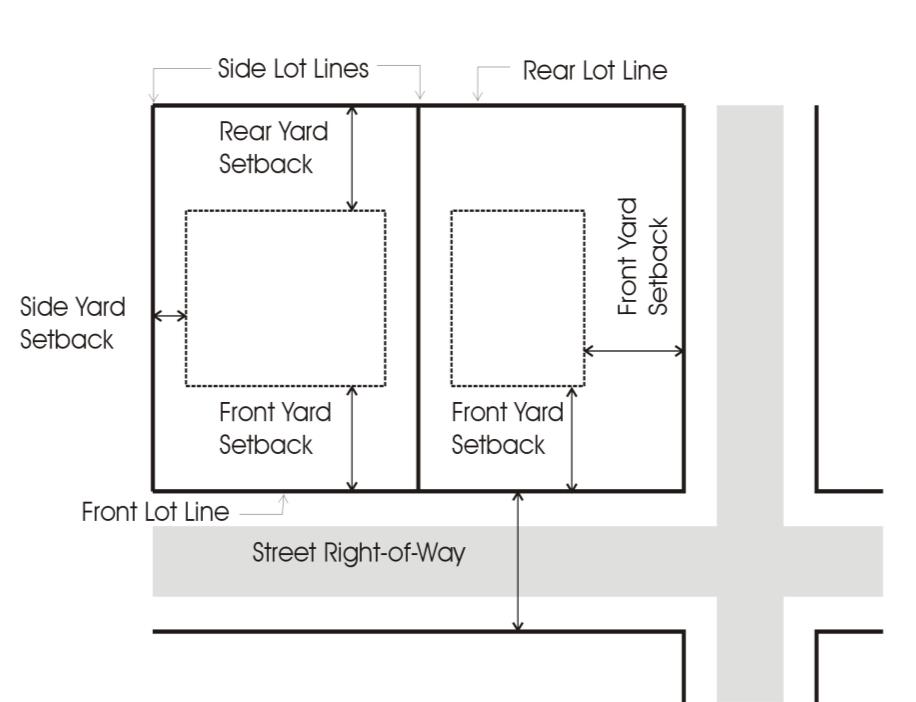
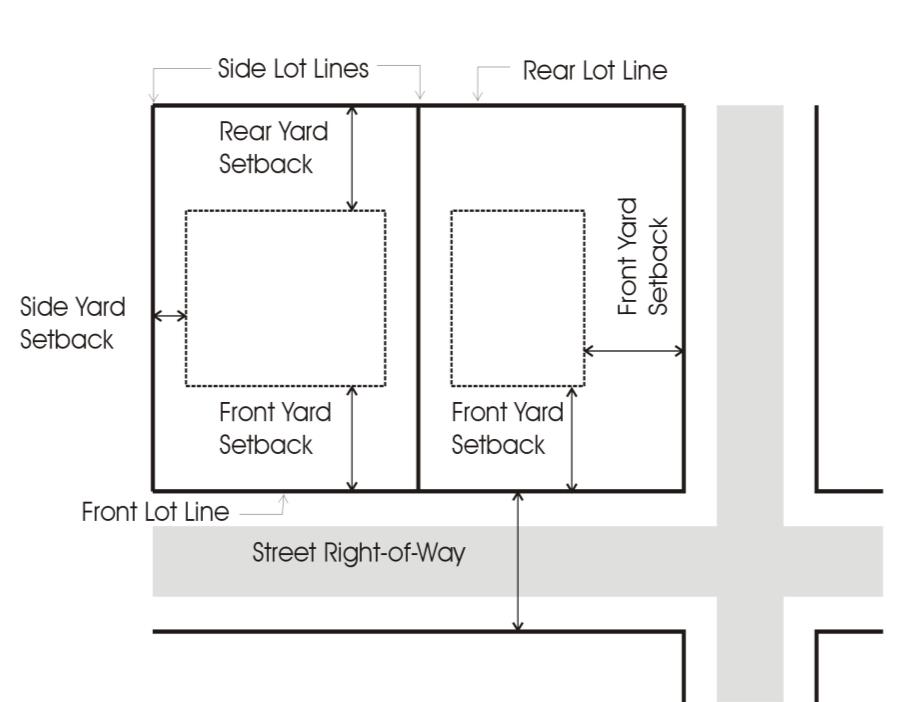
The required minimum horizontal distance between a front, rear, or side lot line and a building line, for the purpose of defining limits within which no building or structure, or any part thereof, shall be erected or permanently maintained. Separate definitions for condominium projects are listed under “condominium, setbacks.” Setback, Parking Lot: The minimum horizontal distance between the street right-of-way or property line and the near edge of a parking lot, excluding necessary and/or approved driveways, frontage roads and landscaping areas. This setback shall remain as open space as defined herein, unless otherwise provided for in this Ordinance.
Sewer
A public sanitary sewage disposal system approved by the Michigan Department of Public Health.
Shopping Center
A grouping of two (2) or more business establishments developed in accordance to an overall plan and designed and built as an interrelated project. Buildings constructed on outlots shall not be considered part of the shopping center unless access and parking easements are provided. See also “Supercenter” and “Supermarket”.
Shoreline
The edge of a body of water measured at the ordinary high-water mark.
Significant Natural, Historical, and Architectural Features
Significant architectural features, drainageways and streams, endangered species habitat, floodplains, hedgerows, significant historical features, landmark trees, ponds and lakes, steep slopes, wetlands, and woodlots.
Sight Distance
The length of roadway visible to the driver. Generally related to the distance or time (perception/reaction time) sufficient for the driver to execute a maneuver (turn from driveway or side street, stop or pass) without striking another vehicle or object in the roadway. Required sight distance shall be based on the standards of the Tuscola County Road Commission.
Sign
See Definitions in Article x, Division x, Signs.
Site Condominium
See “Condominium, site condominium project.”
Site Plan
A scaled drawing(s) illustrating existing conditions and containing the elements required herein as applicable to the proposed development to ensure compliance with zoning provisions.
Small Scale Production Establishment
An establishment where shared or individual tools, equipment, machinery are used to make or grow products on a small scale, including design, production, processing, printing, assembly, treatment, testing, repair, packaging as well as incidental storage, retail or wholesale sales and distribution of products. Included, but not limited to: vegetable farming, making of electronics, food products, prints, leather products, jewelry, clothing/apparel, metal work, furniture, glass, ceramic, and craft beverages. Small scale establishments must have an accessory use, such as retail sales, wholesale trade, and training or education.
Solar Panels
An energy system which converts solar energy to usable thermal, mechanical, chemical or electrical energy to meet all or a significant part of a structures energy requirements.
Special Land Use
A use of land for an activity which, under usual circumstances, could be detrimental to other land uses permitted within the same district but which may be permitted because of circumstances unique to the location of the particular use and which use can be conditionally permitted without jeopardy to uses permitted within such district. A special land use requires that a special land use approval be obtained.
Stable, Private
A stable for the keeping of horses for the use of the residents of the principal use and shall not include the keeping of horses for others, or for commercial boarding, and with a capacity for
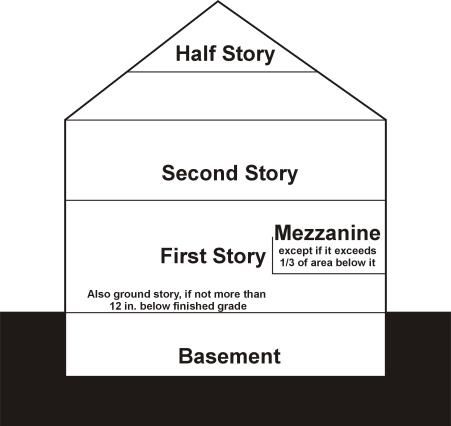
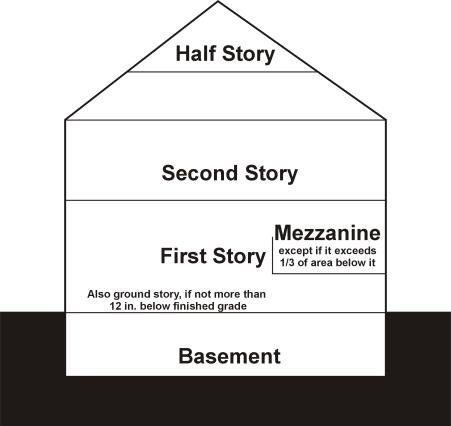
not more than two (2) horses; provided, however, that the capacity of a private stable may be increased if the lot whereon such stable is located contains at least one (1) acre of land for each additional horse stabled thereon. Stable, Public or Commercial: A stable other than a private stable, with a capacity for more than two (2) animals, and carried on within an unplatted tract of land of not less than forty (40) acres for the purposes of rearing and housing horses, mules, ponies or for riding and training academies. State-Licensed Adult and Child Residential Care Facility: See “Adult Care Facility” or “Child Care Organization.” Steep Slopes: Slopes with a grade of twelve percent (12%) or more. Story: That part of a building, except a mezzanine as defined herein, included between the surface of one (1) floor and the surface of the next floor, or if there is no floor above, then the ceiling next above. A story thus defined shall not be counted as a story when more than fifty percent (50%), by cubic content, is below the height level of the adjoining ground. A basement shall not be counted as a story. Street: Any public or private thoroughfare or right-of-way, other than a public or private alley, dedicated to or designed for travel and access to any land, lot or parcel, whether designated as a road, avenue, highway, boulevard, drive, lane, place, court, or any similar designation. Various types of streets are defined below. Arterial Street or Roadway: A street or roadway which carries high volumes of traffic at relatively high speeds and serves as an avenue for circulation of traffic onto, out of, or around the Mayville area. An arterial roadway may also be defined as a major thoroughfare, major arterial or minor arterial roadway. Since the primary function of the regional arterial roadway is to provide mobility, access to adjacent land uses may be controlled to optimize capacity along the roadway. Arterial roadways are listed in the Village Master Plan. Collector Street: A street or road whose principal function is to carry traffic between minor and local roads and arterial roadways but may also provide direct access to abutting properties. Collector streets are classified in the Village Master Plan Cul-de-Sac: A street or road that terminates in a vehicular turnaround. Expressways: Limited access interregional arterial routes, including US- 23, designed exclusively for unrestricted movement, have not private access, and intersect only with selected arterial roadways or major streets by means of interchanges engineered for free-flowing movement. Highways: Streets and roadways which are under the jurisdiction of the Michigan Department of Transportation. Highways may also be classified as expressways or arterial roadways. Local or Minor Street: A street or road whose principal function is to provide access to abutting properties and is designed to be used or is used to connect minor and local roads with collector or arterial roadways. Local streets are designed for low volumes and speeds of twenty-five (25) mph or less, with numerous curb cuts and on-street parking permitted. Private Road: Any road or thoroughfare for vehicular traffic which is to be privately owned and maintained and has not been accepted for maintenance by the Village, Tuscola County , the
State of Michigan or the federal government, but which meets the requirements of this Ordinance or has been approved as a private road by the Village under any prior ordinance.
Public Street
Any road or portion of a road which has been dedicated to and accepted for maintenance by the Village, Tuscola County, State of Michigan, or the Federal government.
Structure
Anything constructed or erected, the use of which requires location on the ground or attachment to something having location on the ground.
Structural Addition
Any alteration that changes the location of the exterior walls or area of a building.
Subdivision
A subdivision as defined in the Village of Mayville Subdivision Control Ordinance.
Subdivision Plat
The division of a tract of land for the purpose of sale or building development, in accordance with the Subdivision Control Act, Michigan Public Act 288 of 1967, as amended.
Substantial Improvement
Any repair, reconstruction, or improvement of a structure, the cost of which equals or exceeds fifty percent (50%) of the market value of the structure either, (1) before the improvement or repair is started, or (2) if the structure has been damaged and is being restored, before the damage occurred. For the purposes of this definition, ``substantial improvement” is considered to occur when the first alteration of any wall, ceiling, floor, or other structural part of the building commences, whether or not that alteration affects the external dimensions of the structure. The term does not, however, include either (1) any project for improvement of a structure to comply with existing state or local health, sanitary, or safety code specifications which are solely necessary to assure safe living conditions, or (2) any alteration of a structure listed on the national register of historic places or the state inventory of historic places.
Supercenter
A retail establishment selling supermarket items as well as those items typically found in a department or discount store.
Supermarket
A retail establishment selling groceries, dry goods, frozen foods and similar items typically within a building of over five thousand (5,000) square feet.
Swimming Pool
Any permanent, non-portable structure or container located either above or below grade designed to allow holding of water to a depth of greater than twenty-four (24) inches, intended for swimming, bathing or relaxation. The definition of swimming pool includes spa, hot tubs and similar devices. A swimming pool shall be considered an accessory structure for purposes of computing lot coverage.
Temporary Building, Structure, or Use for Construction
A building, structure or use permitted to exist for a specified period during periods of construction or renovations on the principal building, structure or use.
Temporary Uses and Seasonal Events
Seasonal outdoor events intended for a limited duration within any zoning district. Such a temporary use shall not be interpreted to be a continuance of a nonconforming use. Temporary uses and seasonal sales events may include carnivals, circuses, farmers market, art fairs, craft shows, sidewalk sales, antique sales, Christmas tree sales, flower sales, flea markets and similar events, and may also include temporary residential uses.
Theater
An enclosed building used for presenting performances or motion pictures which are observed by paying patrons from seats situated within the building. ("Theater" is distinct from adult theater defined separately under adult regulated uses).
Therapeutic Massage
The application of various techniques to the muscular structure and soft tissues of the human body performed by a massage practitioner. A massage practitioner must satisfy two (2) or more of the following requirements: The person is a member of the current Professional Level in the American Massage Therapy Association (AMTA), Associated Bodywork and Massage Professionals (ABMP), International Myomassethics Federation (IMF) or other recognized massage association with equivalent professional membership standards consisting of at least five-hundred (500) hours of training including: theory, practice and techniques of massage (minimum three-hundred (300) hours); human anatomy and physiology (minimum one-hundred (100) hours); and professionalism (minimum one-hundred (100) hours). Instruction in this area shall include training in contraindications, benefits, ethics and legalities of massage, building and marketing a practice and other electives as appropriate. The person is a graduate of a school of massage licensed by the State of Michigan or holder of a current license from another state which requires, at a minimum, the training set forth in paragraph a. above. The person has completed a massage training program at a community college, college, university or technical school located in the United States, where such program requires at a minimum, the training set forth in a. above. The person has passed the National Certification Exam for Massage and Bodywork Practitioners.
Tiny House
A single family dwelling of conventional or modern construction, built on a foundation, which is between 200 and 600 square feet total. A tiny house is independent, habitable, and provides the basic requirements of shelter, heating, cooking, water, and sanitary service and must be connected water, well, sewer, or septic. A tiny house must be on legally created parcel and is subject to setbacks of the underlying zoning requirements.
Topographical Map
A map showing existing physical characteristics, with contour lines at sufficient intervals to permit determination of proposed grades and drainage.
Townhouse
A residential structure or group of structures, each of which contains four (4) or more attached single-family dwelling units with individual rear yards and or front yards designed as an integral part of each single-family dwelling unit.
Traffic Impact Study
The analysis of the potential traffic impacts generated by a proposed project. This type of study and level of analysis will vary dependent upon the type and size of the project.
Rezoning Traffic Impact Study
A traffic impact study which contrasts typical uses permitted under the current and requested zoning or land use classification. This study usually includes a trip generation analysis and a summary of potential impacts on the street system.
Traffic Impact Assessment
A traffic impact study for land uses which are not expected to have a significant impact on the overall transportation system but will have traffic impacts near the site. This type of study focuses on the expected impacts of a development at site access points and adjacent driveways.
Traffic Impact Statement
A traffic impact study which evaluates the expected impacts at site access points and intersections in the vicinity.
Regional Traffic Impact Study
A comprehensive traffic impact study for land uses expected to have a significant long-term impact on the street system. Such a study evaluates the impacts over a long period
and may involve analyses of alternate routes. This type of study is typically prepared using a computer model which simulates traffic patterns. Truck Terminal: A structure to which goods, except raw or unprocessed agricultural products, natural minerals, or other natural resources, are delivered for immediate distribution to other parts of the Village, for delivery to other intrastate or interstate destinations, or for distribution involving transfer to other modes of transportation.